








How 360° VR Video Influences Business Presentation
For most manufacturing companies, presenting the enterprise is an important part of the sales process. Potential customers, partners, or investors want not only to see the finished product but also to understand how production is organised, what equipment is used, what quality standards are applied, and how large the enterprise is.
Organising a personal visit for every potential customer is not always possible. This is especially true when a company operates in international markets, receives a large number of enquiries, or has a manufacturing process associated with safety requirements. This is why more and more enterprises are using a virtual production tour as a tool for presenting their capabilities.
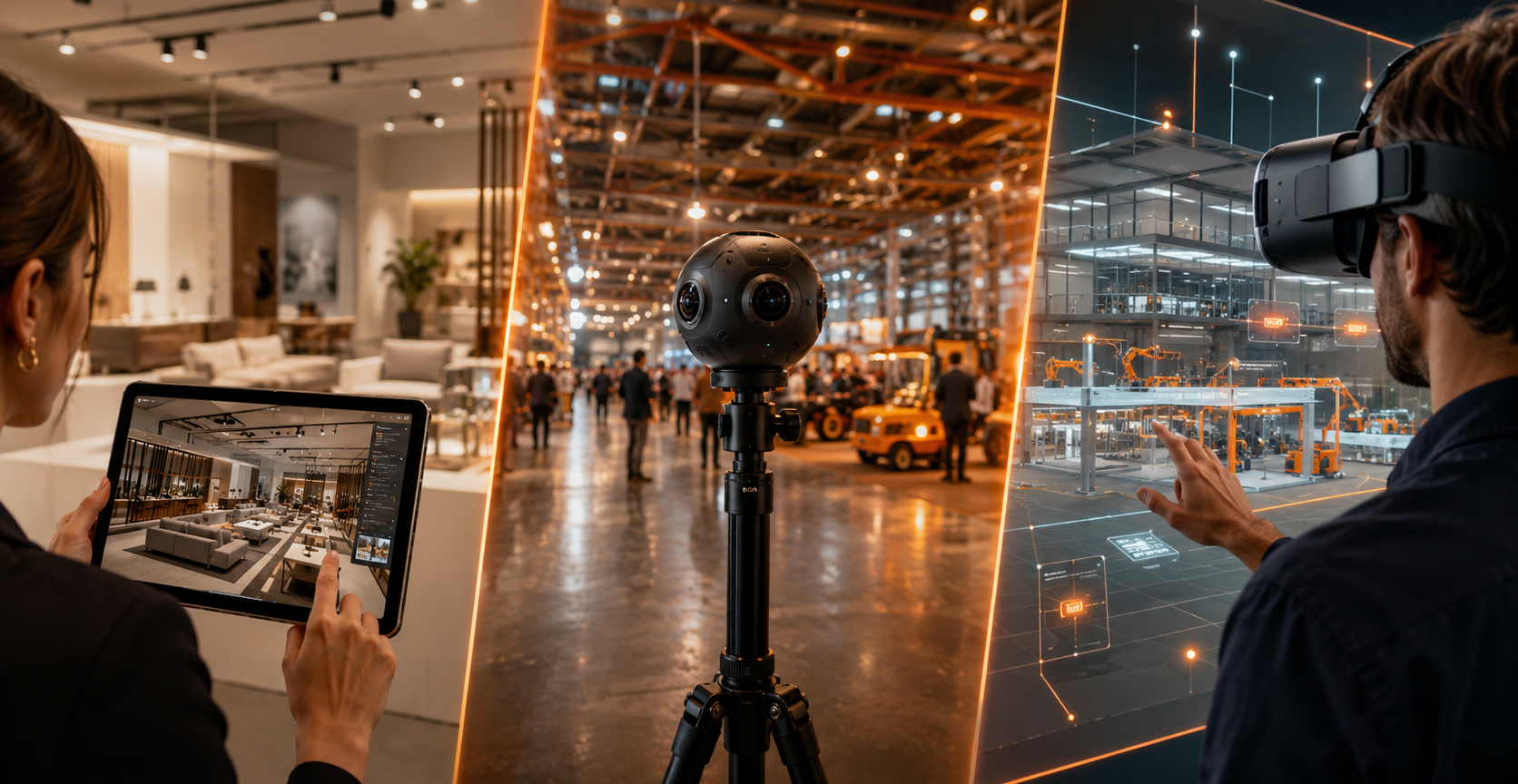
Unlike a conventional video, a 360° VR production video allows viewers to look around the space independently. This creates a sense of being present at the enterprise and helps them better understand the scale of production, the logic of the processes, and the organisation of work.
At the same time, it is important to understand that the effectiveness of this format depends not only on the technology but also on a properly developed scenario, the quality of the material, and how successfully it is integrated into the sales process.
According to benchmarks used to evaluate immersive content, 360° VR video can provide:
- up to 95% higher content engagement;
- 2–3 times longer interaction with the video;
- up to 80% better understanding of a product or process;
- complete immersion in the environment;
- the ability to present a facility anywhere in the world;
- a reduced need for physical visits to the production site.
These figures are not a guaranteed result for every project, but they demonstrate the potential advantages of an immersive format compared with traditional presentation materials.
For B2B sales, this means that the customer can see the company’s production capabilities, better understand the process, and move more quickly to a substantive discussion. Instead of giving lengthy explanations, a manager can show the actual production facility, while a potential partner can assess the level of the enterprise even before a personal meeting.
In addition to demonstrating scale, a VR production tour helps build trust. When an enterprise openly shows its workshops, equipment, quality control system, and production processes, this often has a positive effect on how the company is perceived. This is particularly relevant for manufacturers of complex products, contract manufacturers, exporters, and enterprises working with large corporate customers.
It is also important to note that a virtual production tour does not replace a personal visit when one is required. It helps reduce the number of preliminary meetings, simplifies the introduction to the company, and makes initial negotiations more focused. In many cases, after watching a 360 production video, potential customers already come with specific questions about cooperation instead of spending time on a general introduction to the enterprise.
If a company plans to use 360 video for a company presentation, it is worth considering in advance how the material will be integrated into marketing and sales. More information about the possibilities of this solution is available on the 360 VR Video page:
https://www.adv.ua/solutions/vr-360-video/
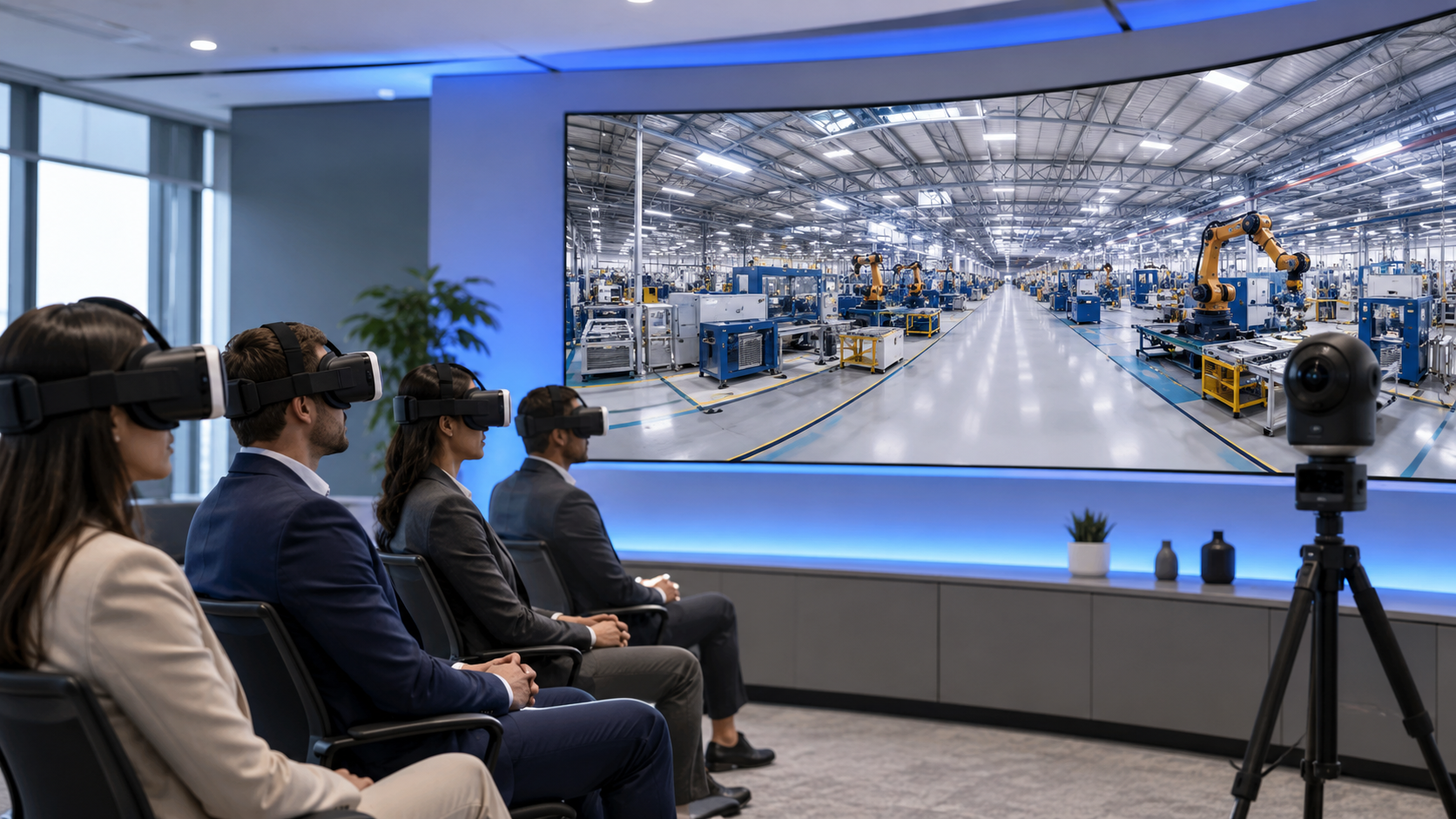
Where to Use a Virtual Production Tour
One of the main advantages offered by a virtual enterprise tour is its versatility. A single professionally prepared piece of content can be used across different communication channels, from a corporate website to international trade exhibitions.
The more customer touchpoints use the same content, the greater its practical value becomes. This is why it is advisable to determine where the VR production presentation will be used before filming begins.
On the Company Website
A corporate website is often the first place where a potential customer becomes familiar with an enterprise. If production is one of the company’s competitive advantages, it should be presented as clearly as possible.
A virtual production tour can be placed on the following pages:
- “About Us”;
- “Production”;
- “Production Capacity”;
- “For Partners”;
- “For Investors”;
- a dedicated landing page.
This format helps visitors better understand the scale of the enterprise, the level of automation, production processes, and the organisation of work. It is especially relevant for B2B companies, where the decision to cooperate is often made after a detailed assessment of production capabilities.
In Sales Presentations
Sales managers often have to explain the same processes repeatedly to different potential customers. A 360° VR production video makes these explanations more visual.
Such content can be used during:
- online meetings;
- video calls;
- negotiations;
- commercial proposal presentations;
- presentations for new customers.
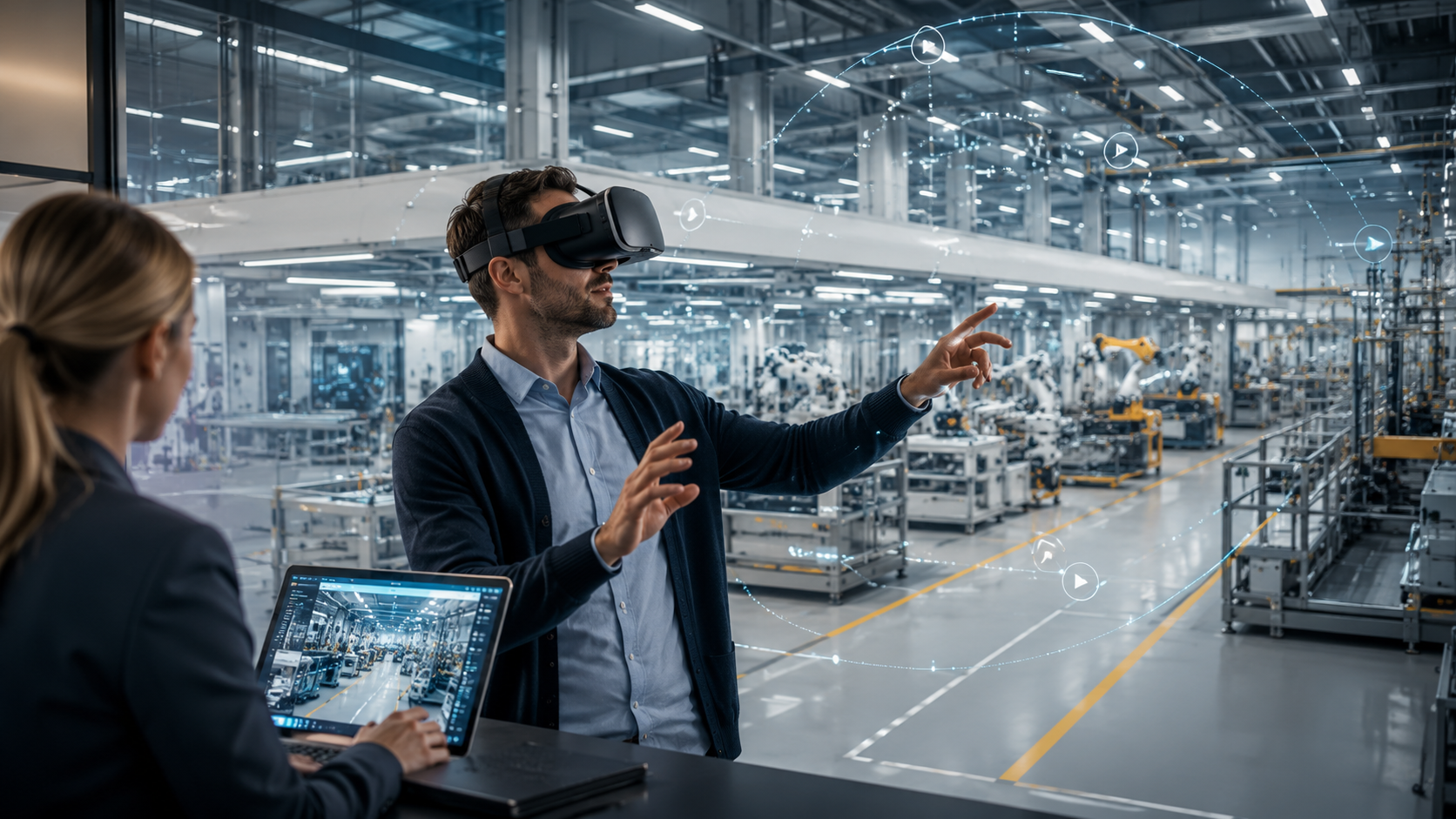
Instead of providing a lengthy description of the manufacturing process, the manager demonstrates the enterprise, while the viewer independently explores the workshops, equipment, and key production stages. This makes it possible to move more quickly to a discussion of a specific project.
At International Trade Exhibitions
Participation in trade exhibitions requires significant expenditure on logistics, demonstration equipment, and stand organisation. At the same time, presenting the actual production facility at an exhibition is practically impossible.
A VR production tour solves this problem. Visitors to the stand can see the enterprise in just a few minutes, regardless of the country in which it is located.
This approach is particularly useful for companies that export their products or are looking for new international partners. A potential customer receives a more complete understanding of the company’s production capabilities without the need to organise a separate trip.
During Negotiations with Partners
During negotiations, it is important to quickly create an understanding of the company’s capabilities. Photographs or a presentation do not always convey the scale of an enterprise.
A virtual factory tour makes it possible to show:
- production areas;
- modern equipment;
- the level of automation;
- production organisation standards;
- internal enterprise logistics;
- quality control.
This makes it easier for partners to assess the potential for cooperation and obtain answers to many questions at an early stage of negotiations.
For Investors
During investment presentations, it is important to demonstrate not only financial indicators but also the asset itself.
A virtual enterprise tour can become part of an investor presentation when it is necessary to show:
- production infrastructure;
- the scale of the enterprise;
- the level of technical equipment;
- prospects for developing production capacity;
- operating production lines.
This format helps make the presentation clearer and more specific, especially when potential investors are located in another country.
In Email Communications and Lead-Nurturing Materials
Not every potential customer is ready to immediately arrange a meeting or visit the enterprise. A decision is often made gradually after several interactions with the company.
In such cases, an online production demonstration can become a useful part of email communication or a series of lead-nurturing materials.
A link to the 360 production video can be added:
- to emails sent after the first introduction;
- after an online presentation;
- to follow-up messages after negotiations;
- to commercial proposals;
- to materials for dealers and distributors.
This allows a potential customer to explore the enterprise independently at a convenient time and return to the content whenever necessary.
As an example of how this format can be used, you can view the completed 360 Video of the Factory Viyar project, where 360° VR video is used to demonstrate the enterprise’s production capabilities:
https://www.adv.ua/cases/360-video-of-the-factory-viyar/
Another example is the Syngenta Piccolo Machine in VR project, which demonstrates how immersive content can be used to explain complex technological processes:
https://www.adv.ua/cases/syngenta-piccolo-machine-in-vr/
How to Prepare for Creating a Virtual Production Tour
The quality of a virtual production tour depends not only on the equipment or filming technology. Preparation is far more important. If, before production begins, you clearly understand who the content is intended for, what business objective it should achieve, and where it will be used, the final result will be significantly more effective.
Before filming, it is worth defining four key aspects:
- the project’s objective;
- the target audience;
- the tour scenario and route;
- how the material will be used after production.
This approach helps transform a VR production tour from simply an impressive walkthrough into a complete sales and company presentation tool.
Define the Objective
The first step is to understand why the company needs a virtual enterprise tour. The same production facility can be presented in completely different ways depending on the project’s purpose.
The most common objectives include:
- demonstrating production capabilities to customers;
- strengthening international sales;
- presenting the company to partners;
- attracting investors;
- explaining a complex technological process;
- replacing part of the physical factory visits.
For example, if the primary audience consists of potential customers, the focus should be placed on production capabilities, quality control, and the company’s ability to fulfil large-scale orders. If the material is intended for investors, greater emphasis may be placed on the scale of the enterprise, its infrastructure, and future growth potential.
A clearly defined objective helps determine what should be included and what can be left out.
Define the Target Audience
Once the objective has been established, it is important to determine who will be watching the 360° VR production video. Different audiences pay attention to different aspects of an enterprise.
The audience most commonly includes:
- customers;
- business partners;
- investors;
- dealers;
- distributors;
- internal teams;
- trade show visitors.
For example, a potential customer wants to be confident that the company is capable of fulfilling an order of the required scale while maintaining consistent product quality.
Business partners are generally more interested in production processes, operational standards, and the company’s reliability.
Investors, in turn, pay closer attention to the overall level of the business, production infrastructure, the modernity of the equipment, and the company’s potential for future growth.
The more accurately the audience is defined, the easier it becomes to create 360 video for a company presentation that is truly useful.
Select the Key Tour Locations
When viewing a virtual production tour, the audience should become familiar with the enterprise step by step. For this reason, it is important to define the tour route before filming begins.
A typical route includes:
- the entrance and an overall view of the facility;
- production workshops;
- equipment;
- the main stages of the manufacturing process;
- quality control;
- warehouse facilities;
- logistics;
- finished products.
The route should follow a logical sequence. Viewers should understand how raw materials move through every production stage until they become finished products.
If the facility is large, it is not necessary to show every room. It is far more effective to focus only on the areas that best demonstrate the company’s strengths.
This approach makes the online production demonstration easy to understand, even for someone who has never visited a manufacturing facility before.
Prepare Explanations
A 360° VR video shows the environment, but it does not always explain what is happening in each scene. Therefore, during the preparation stage, it is important to determine what additional information will help viewers better understand what they are seeing.
It is advisable to plan in advance:
- which captions will be required;
- where voice-over narration would be appropriate;
- which processes should be explained using diagrams;
- where 3D elements should be added;
- which technical terms should be explained in simple language.
For example, a complex production cycle or the operation of high-tech equipment cannot always be understood through video alone. Short text explanations, infographics, or animations help communicate information more effectively and make the viewing experience more meaningful.
The key is not to overload the tour with information. Explanations should complement the video rather than distract from it.
Plan Future Use
Another common mistake is producing high-quality content but using it in only one place.
In reality, a VR production presentation can be used across multiple communication channels.
Before the project begins, it is important to determine where the material will be used:
- the corporate website;
- YouTube;
- VR headsets;
- international trade exhibitions;
- presentations;
- sales materials;
- email communications;
- social media.
This influences not only the scenario but also the video’s length, the style of explanations, the structure of the route, and the way viewers interact with the content.
For example, trade exhibitions typically require shorter scenarios, while a corporate website can feature a complete virtual production tour with a detailed presentation of the enterprise.
When 360° VR Video Is Not Necessary
Although a virtual production tour is an effective tool for presenting a manufacturing enterprise, it is not suitable for every business objective. In some situations, investing in this format may not deliver the expected results if the project’s goals do not align with its capabilities.
When evaluating whether to create a 360° VR production video, the decision should be based primarily on business needs rather than simply on the desire to use a modern technology.
Generally, 360° VR video may not be necessary if:
- you need to create a simple corporate branding video quickly;
- the facility has little visual value;
- the production process is straightforward and does not require an in-depth presentation;
- photographs or a short video are sufficient for the target audience;
- there is no clear understanding of where the finished material will be used.
For example, if a company simply needs to introduce its brand on social media, a traditional video is often a better choice. It is easier to consume, simpler to adapt for different platforms, and better suited to short viewing sessions.
Likewise, a virtual production tour may not be justified if the manufacturing process itself is not one of the company’s competitive advantages or does not play an important role in the customer’s decision-making process.
Another situation is the absence of a clear usage strategy. If, after the project is completed, the content is not integrated into the company’s website, presentations, negotiations, or marketing communications, its practical value will be significantly lower.
This is why a VR production tour should be approached as a business tool. Its effectiveness is determined not by the technology itself, but by how well it helps achieve a specific business objective.
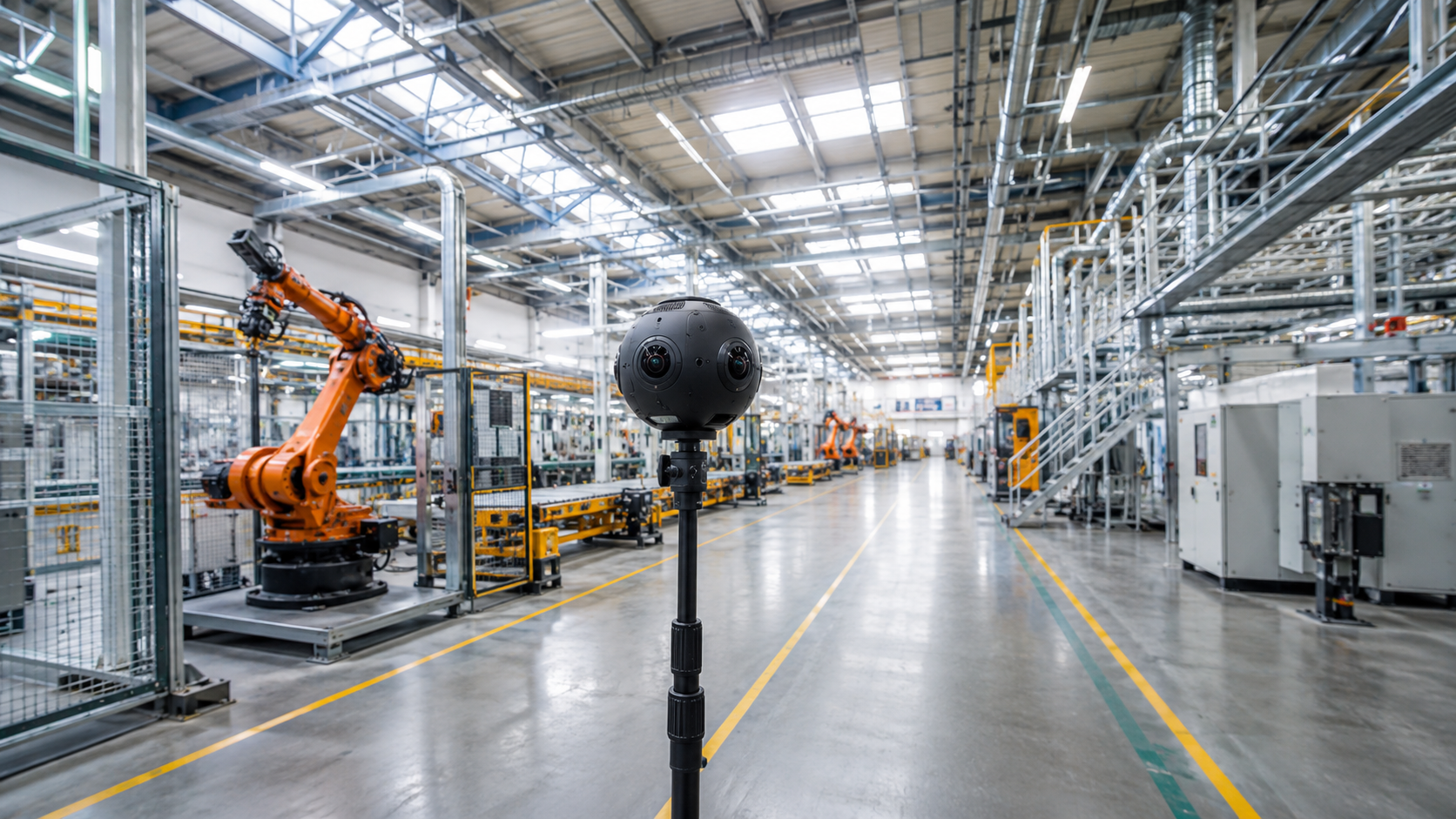
How to Determine Whether Your Business Needs a Virtual Production Tour
There is no universal rule that applies to every company. However, there are a number of situations in which a virtual enterprise tour can become a valuable addition to sales, marketing, and partner communications.
If you answer “yes” to several of the points below, it is worth considering this format.
Checklist
A virtual production tour is worth considering if:
- customers frequently want to see your production facility before making a decision;
- you sell a complex product or technological solution;
- physical visits to your production facility are difficult to organise;
- your company works with international customers;
- your sales team spends a significant amount of time repeatedly explaining production processes;
- you regularly participate in international trade exhibitions;
- you need to present your enterprise to partners or investors;
- it is important to demonstrate your production capacity, operational standards, equipment, or infrastructure;
- a conventional presentation or catalogue is no longer sufficient for effective communication.
If most of these points apply to your business, a VR production presentation can help make the introduction to your company more visual while reducing the time needed to explain your manufacturing capabilities.
At the same time, it is important to remember that a 360 production video is not a standalone sales tool. It delivers the best results when used alongside a corporate website, presentations, commercial proposals, and other communication channels.
For companies that export products or actively acquire new B2B customers, an online production demonstration often helps move more quickly from an initial introduction to meaningful discussions about cooperation. Potential customers gain the opportunity to explore the company’s production capabilities before visiting the facility in person, allowing sales managers to focus on answering specific questions rather than beginning with a basic introduction to the enterprise.
Conclusion
A virtual production tour created in the 360° VR video format enables companies to showcase their manufacturing facilities, production processes, and capabilities without the need to organise physical visits for every potential customer or business partner. This format is particularly valuable for B2B sales, international cooperation, partner negotiations, trade exhibitions, and investment presentations.
At the same time, the effectiveness of a VR production tour depends on much more than filming quality. During the preparation stage, it is essential to determine the business objective, identify the target audience, decide which production processes should be presented, and plan how the finished content will be used once the project is completed.
It is this combination of a well-defined scenario, a logical structure, and integration into marketing and sales activities that transforms 360 video for a company presentation into a practical communication tool, helping businesses introduce customers to their production capabilities more efficiently and support the decision-making process.
If you are planning to use a 360° VR production video, we also recommend exploring the 360 VR Video solution, which provides detailed information about the format and its possible applications:
https://www.adv.ua/solutions/vr-360-video/
Examples of completed ADVIN GLOBAL projects can be found here:
- 360 Video of the Factory Viyar — an example of using a virtual production tour to showcase manufacturing capabilities:
https://www.adv.ua/cases/360-video-of-the-factory-viyar/ - Syngenta Piccolo Machine in VR — an example of demonstrating a technological process using VR:
https://www.adv.ua/cases/syngenta-piccolo-machine-in-vr/
Request a Consultation
ADVIN GLOBAL creates 360° VR videos and virtual production tours for presenting manufacturing enterprises, industrial facilities, and technological processes.
We help companies develop the right scenario, choose the optimal presentation format, carry out professional filming, and prepare content for use on corporate websites, in presentations, at international trade exhibitions, during partner negotiations, and across other communication channels.
Request a consultation to discover how you can present your manufacturing facility to customers, partners, or investors without organising physical visits, while making your production capabilities easier to understand and more convincing.