








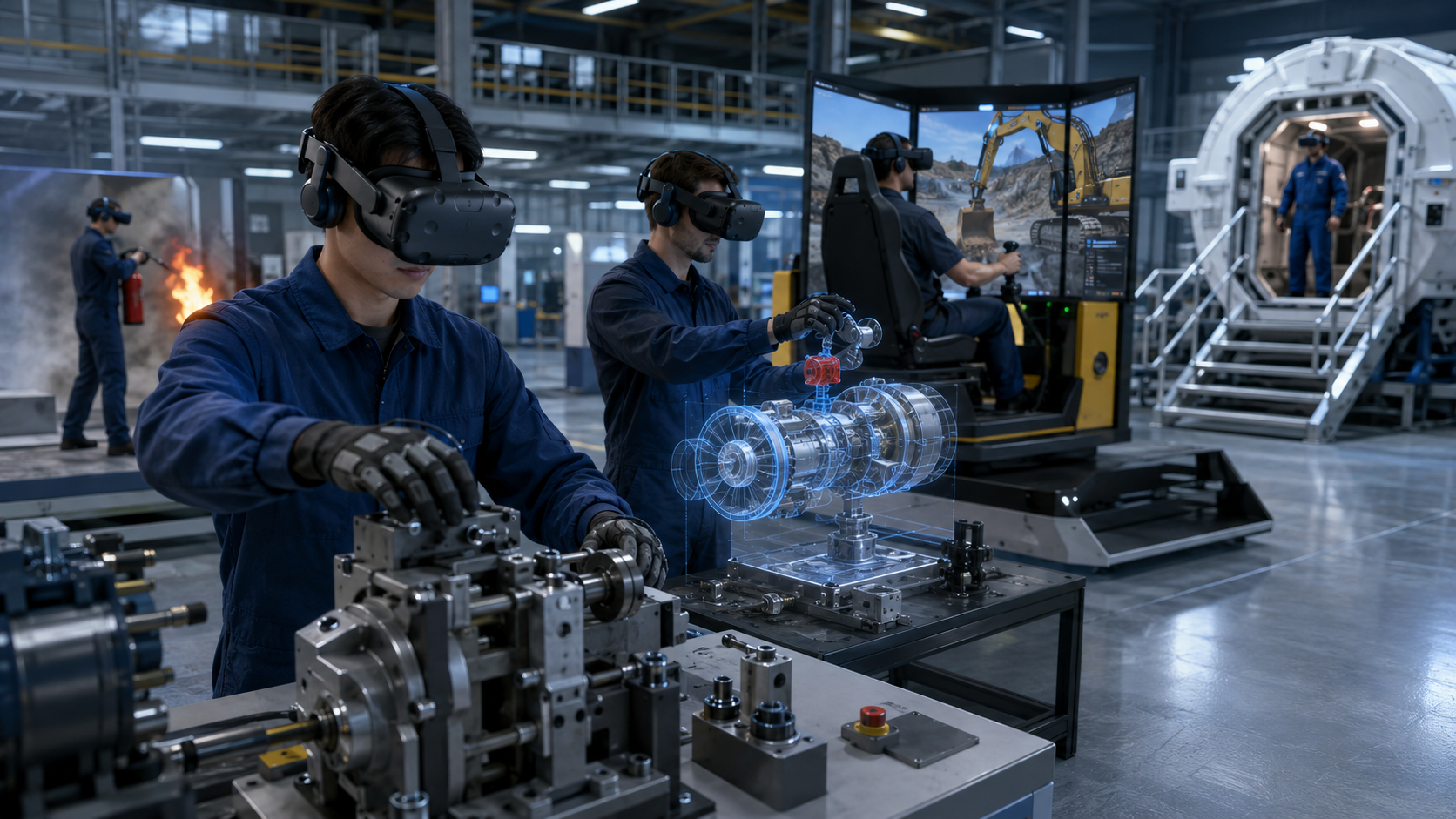
VR Simulators Are No Longer a Technology of the Future
Just a few years ago, a VR simulator was primarily associated with gaming and entertainment. Today, the situation has changed dramatically. Virtual reality has become a practical business tool that helps companies train employees, reduce the number of errors, improve safety, and lower training costs.
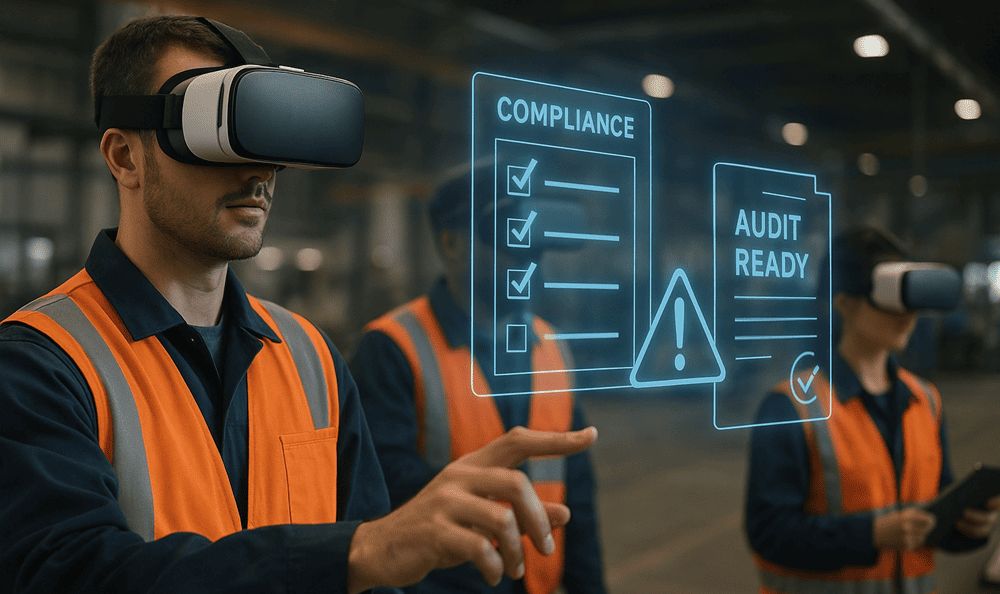
Manufacturing companies are increasingly using virtual 3D environment creation to simulate real production processes. Employees can practice complex or hazardous operations without putting people, equipment, or production at risk.
Modern VR solutions make it possible to recreate virtually any surrounding environment: production facilities, laboratories, warehouses, technical rooms, vehicles, and even spacecraft. That is why VR environment creation has become one of the most promising areas of digital transformation for industrial enterprises.
Let’s take a look at five real-world case studies that demonstrate the capabilities of VR in manufacturing and corporate training.
-
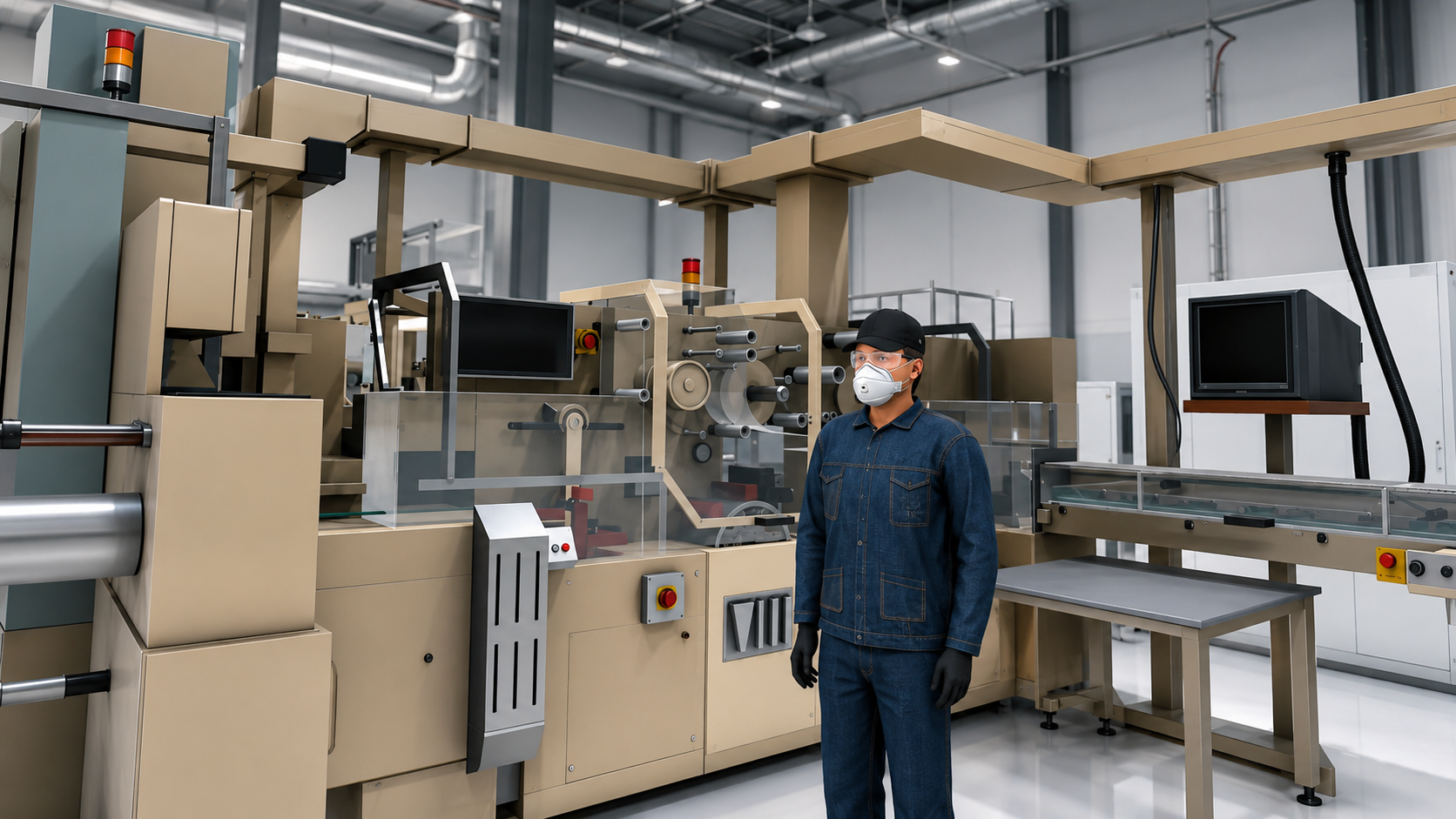
Philip Morris: Training Manufacturing Personnel in VR
Large manufacturing companies constantly face the challenge of training new employees quickly. Traditional training takes time, requires experienced instructors, and does not always guarantee consistent learning quality.
This was exactly the challenge addressed by the VR project for Philip Morris.
The primary goal was to build a fully interactive training environment that accurately replicates the company’s production line.
The project included:
- creating digital replicas of manufacturing equipment;
- modeling production processes;
- integrating realistic 3D models;
- programming interactive scenarios;
- developing step-by-step instructions;
- creating equipment animations;
- monitoring the accuracy of user actions.
Employees do much more than simply watch training materials, they interact with every component of the production line, operate equipment, perform required procedures, and receive immediate feedback.
Such a VR simulator allows employees to repeat training as many times as necessary without interrupting actual production.
An additional advantage is that training scenarios can easily be updated whenever equipment is modernized or production processes change.
-
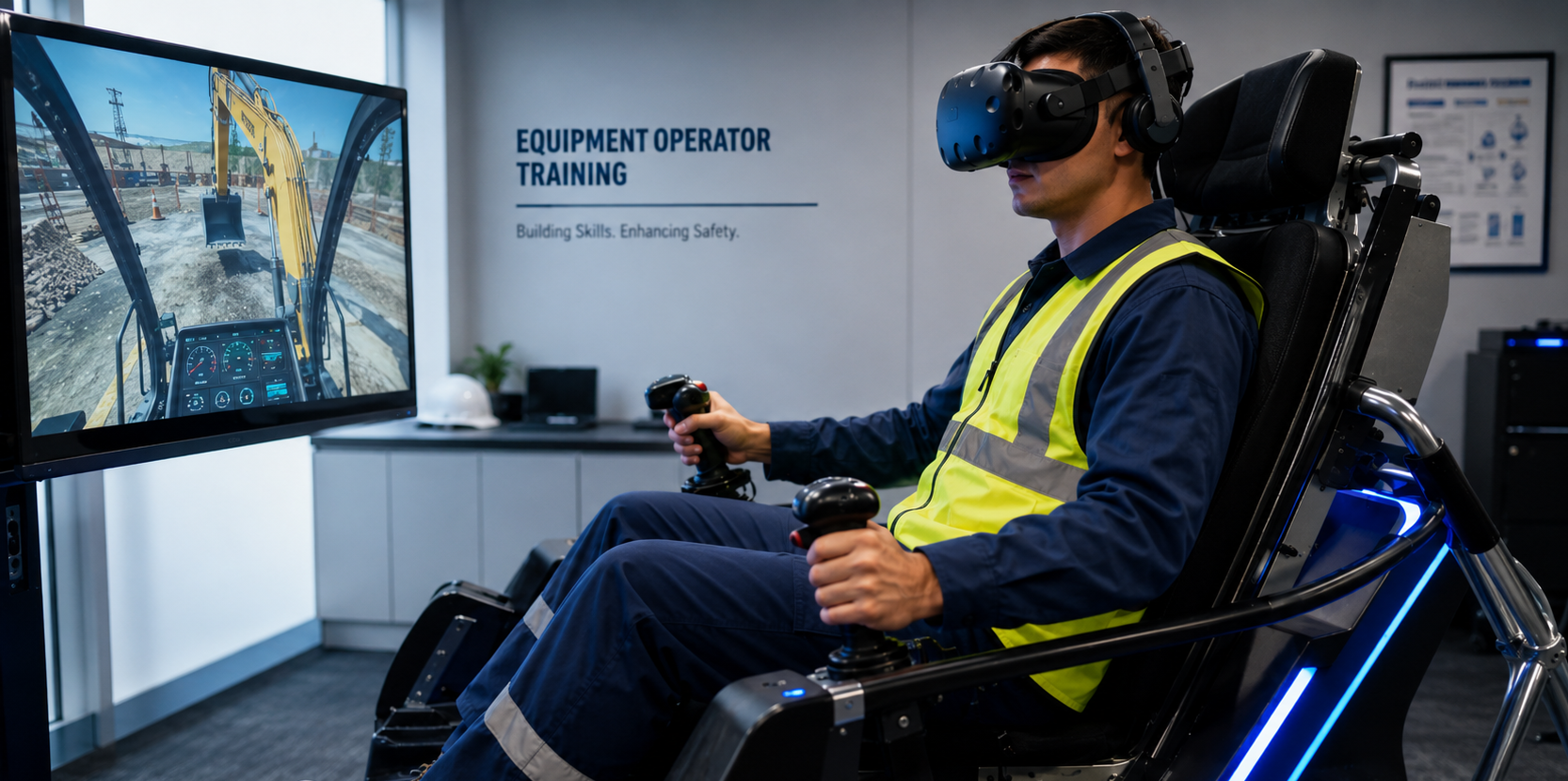
Gentherm: Training Employees to Operate Complex Manufacturing Equipment
Another excellent example is the development of a VR training solution for the international company Gentherm.
The company manufactures automotive climate control systems and operates highly sophisticated automated equipment.
Training new machine operators in real production environments presents several challenges:
- expensive production downtime;
- risk of equipment damage;
- possibility of mistakes by inexperienced employees;
- limited access to production machinery.
To solve these issues, a comprehensive VR environment creation project was developed, accurately reproducing the operator’s real workplace.
Employees complete the entire training cycle by:
- becoming familiar with the equipment;
- learning how it operates;
- performing manufacturing procedures;
- responding to emergency situations;
- following standardized operating algorithms.
To maximize realism, the project incorporated advanced computer graphics technologies, high-quality animations, interactive training templates, and realistic simulations of production processes.
This approach significantly reduces the onboarding time for new employees.
3. Educational VR Simulator for Technical Training
VR technology is not limited to large corporations.
Educational institutions and professional training organizations are increasingly adopting VR simulators as well.
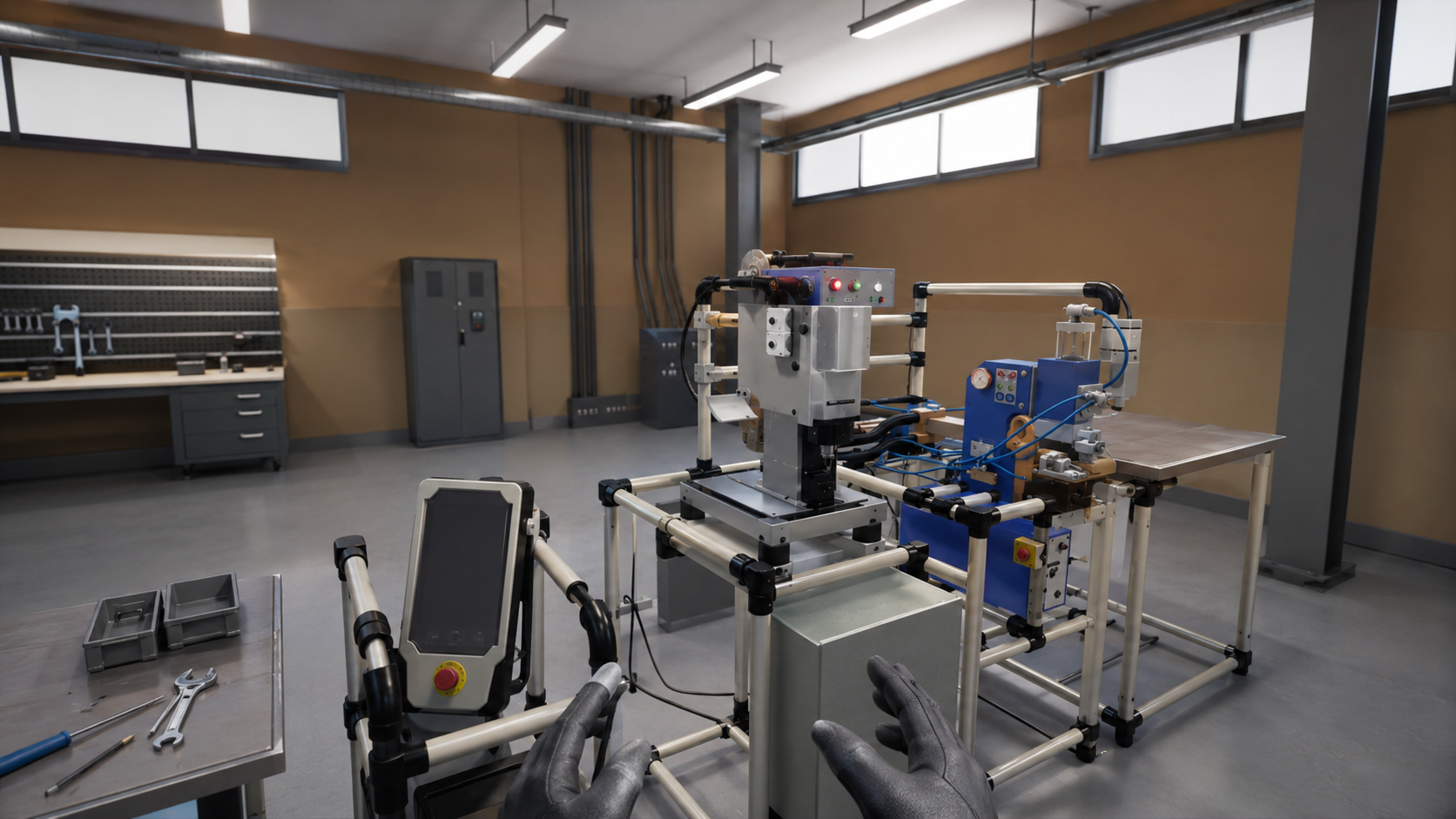
In this project, an interactive learning environment was developed where users gradually master technical processes through hands-on experience.
The key feature of this solution is learning by doing.
Users independently perform every operation:
- working with equipment;
- interacting with tools;
- assembling mechanisms;
- verifying the accuracy of their actions.
Meanwhile, the system automatically analyzes every step.
Whenever a mistake is made, users immediately receive guidance or recommendations for completing the task correctly.
The project utilized modern design methodologies, optimized programming, detailed 3D models, interactive control devices, and carefully developed environmental elements.
Solutions like these make it possible to standardize technical education regardless of where learners are located.
-
Boeing: Preparing Astronauts for Space Missions
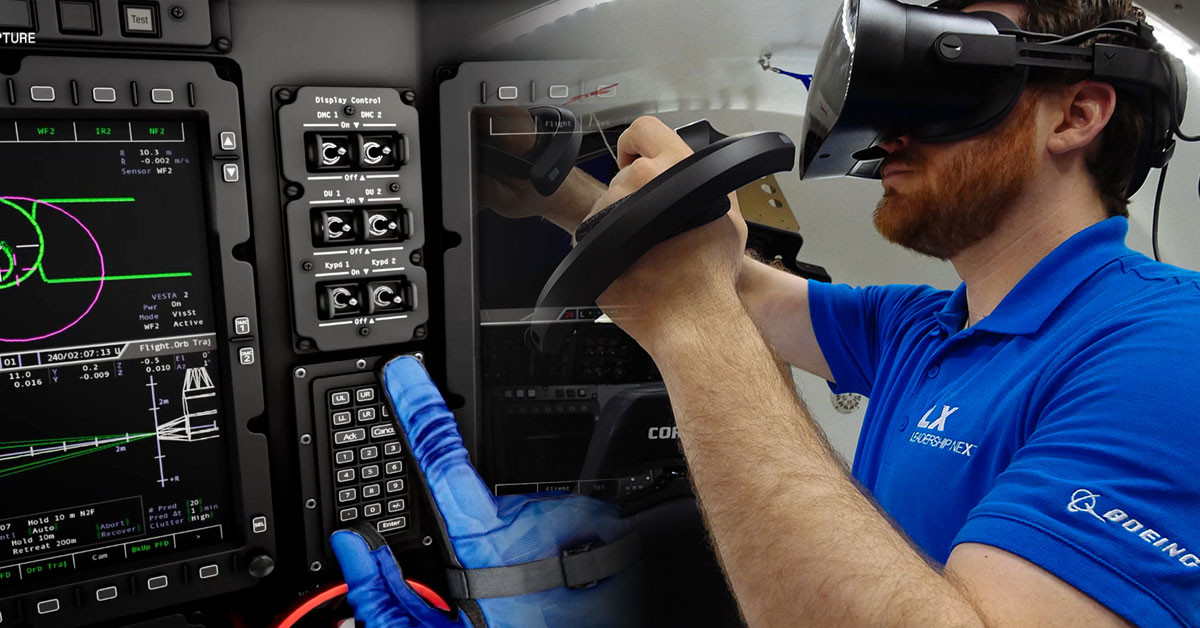
One of the world’s most impressive examples of VR implementation is the training of Boeing Starliner astronauts.
Preparing astronauts requires absolute precision. Any mistake during docking with the International Space Station can have extremely serious consequences.
For this reason, Boeing partnered with Varjo to introduce immersive VR training.
Inside virtual reality, astronauts practice:
- docking with the ISS;
- emergency procedures;
- unexpected mission scenarios;
- crew coordination;
- decision-making during critical situations.
Thanks to exceptionally high visual fidelity, astronauts experience spacecraft interiors with near-photorealistic accuracy.
These immersive training sessions allow astronauts to repeat highly complex procedures countless times without exposing themselves to real-world danger.
One of the greatest advantages is the ability to train crews from different countries simultaneously, even when they are located in separate training facilities.
This example clearly demonstrates that virtual 3D environment creation is now used even in some of the world’s most demanding industries
-
Vodafone: Improving Presentation Skills with VR
At first glance, this case differs from manufacturing.
However, it perfectly demonstrates the versatility of VR technology.
Vodafone partnered with VirtualSpeech to recreate its UK Pavilion as a virtual environment.
Employees can repeatedly rehearse presentations before speaking to a live audience.
The system enables users to:
- upload presentation slides;
- rehearse presentations;
- receive automated performance analysis;
- monitor their own progress;
- provide managers with learning analytics.
One particularly valuable feature is AI-powered feedback, which evaluates presentation quality and provides recommendations for improvement.
The project delivered impressive results:
- a customized VR environment was completed in just four weeks;
- 91% of employees wanted more VR-based training;
- 93% would recommend the platform to colleagues.
This case demonstrates that a VR simulator is valuable not only for manufacturing operations but also for developing communication and presentation skills.
What All These Cases Have in Common
Regardless of the industry, every successful VR project shares several common principles.
First, they accurately recreate real working environments.
Second, users actively interact with every element of the simulation rather than simply observing.
Third, learning is based on practical experience instead of passive instruction.
Modern VR environment creation typically includes:
- modeling industrial facilities;
- developing detailed 3D models of equipment;
- interactive training scenarios;
- realistic animations;
- physical simulations of machinery;
- digital overlays of information;
- integration with modern VR headsets;
- collection of training statistics;
- performance evaluation.
This comprehensive approach delivers the greatest value from VR implementation.
Why More Manufacturers Are Adopting VR
The advantages of VR have already been proven by hundreds of companies around the world.
The most significant benefits include:
- faster onboarding of new employees;
- fewer production errors;
- improved workplace safety;
- reduced operational costs;
- elimination of risks to expensive equipment during training;
- the ability to train anytime;
- standardized training quality regardless of location;
- continuous updates to training scenarios.
For these reasons, VR is now widely adopted across manufacturing, automotive production, energy, healthcare, aviation, aerospace, education, and the corporate sector.
These case studies clearly show that VR is no longer an experimental technology. It has become a mature business solution that enables organizations to solve practical challenges such as employee training, workplace safety, cost reduction, and improved operational performance.
Whether it is Philip Morris’ production line, Gentherm’s automated equipment, educational VR programs, Boeing’s astronaut training, or Vodafone’s presentation coaching, the outcome remains the same: employees can safely practice real-life scenarios inside immersive virtual environments.
That is why virtual 3D environment creation, VR environment creation, and professional VR simulator development are becoming strategic investments for organizations seeking to improve workforce training, minimize operational risks, and accelerate digital transformation across manufacturing processes.