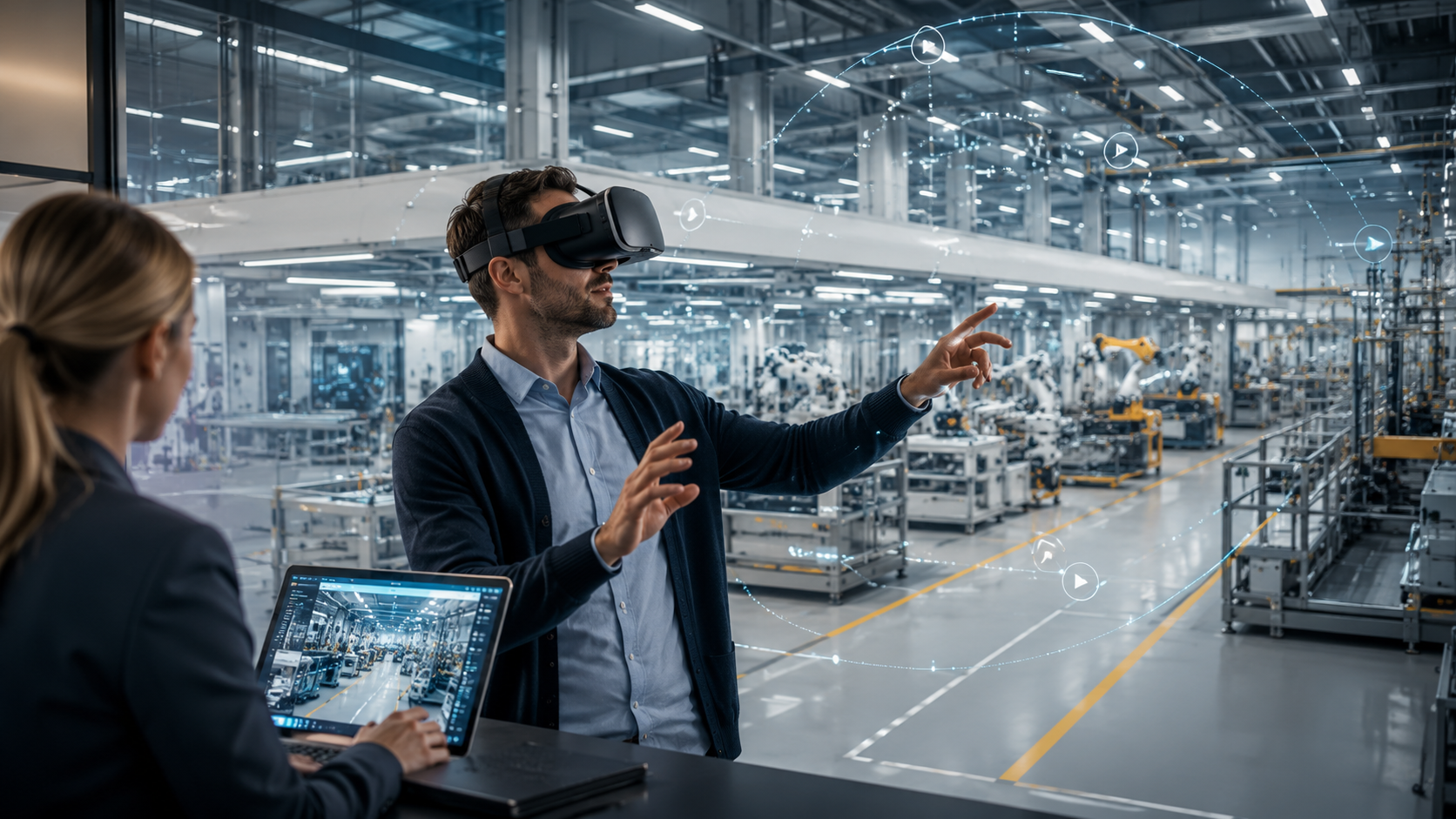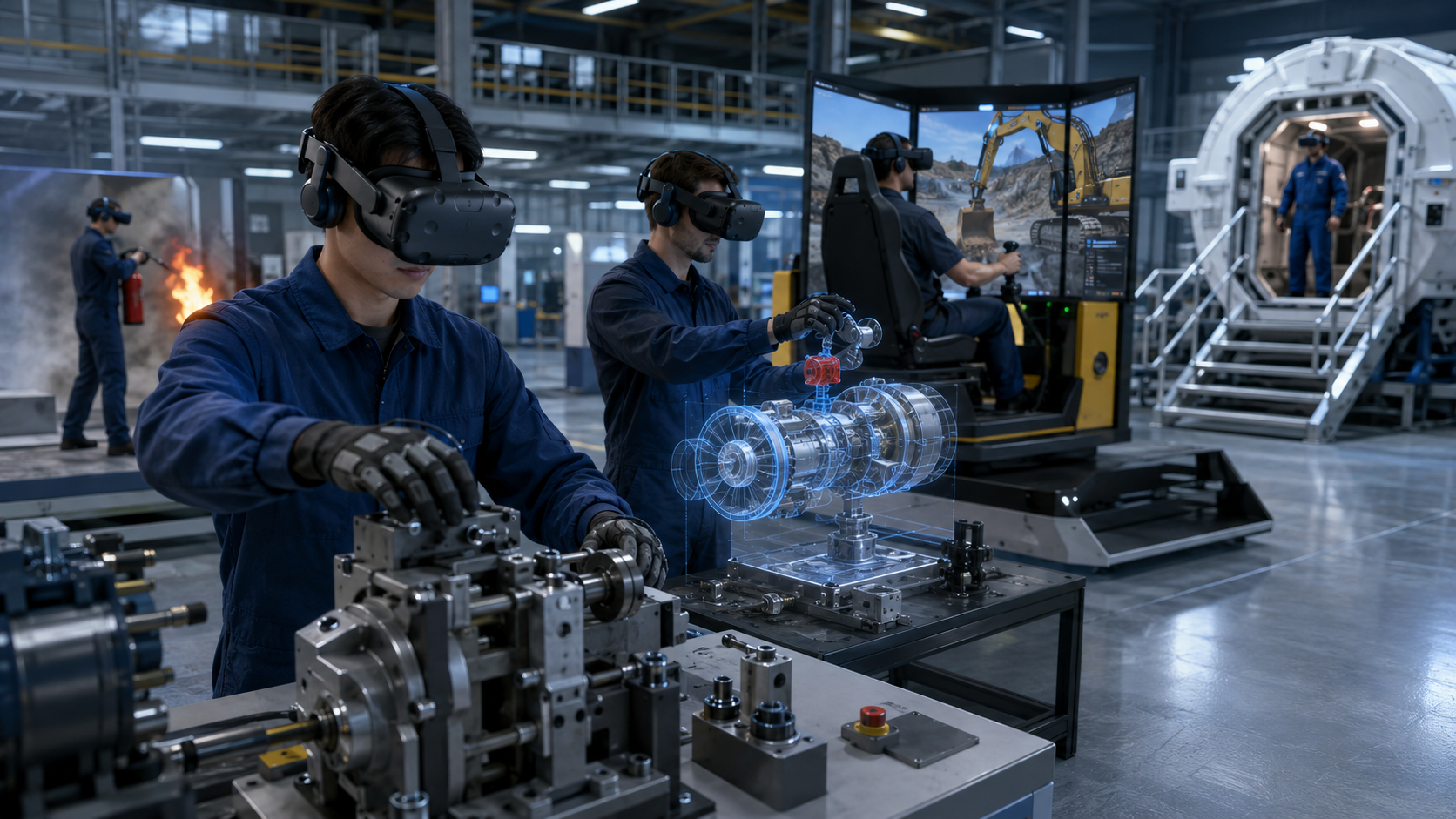









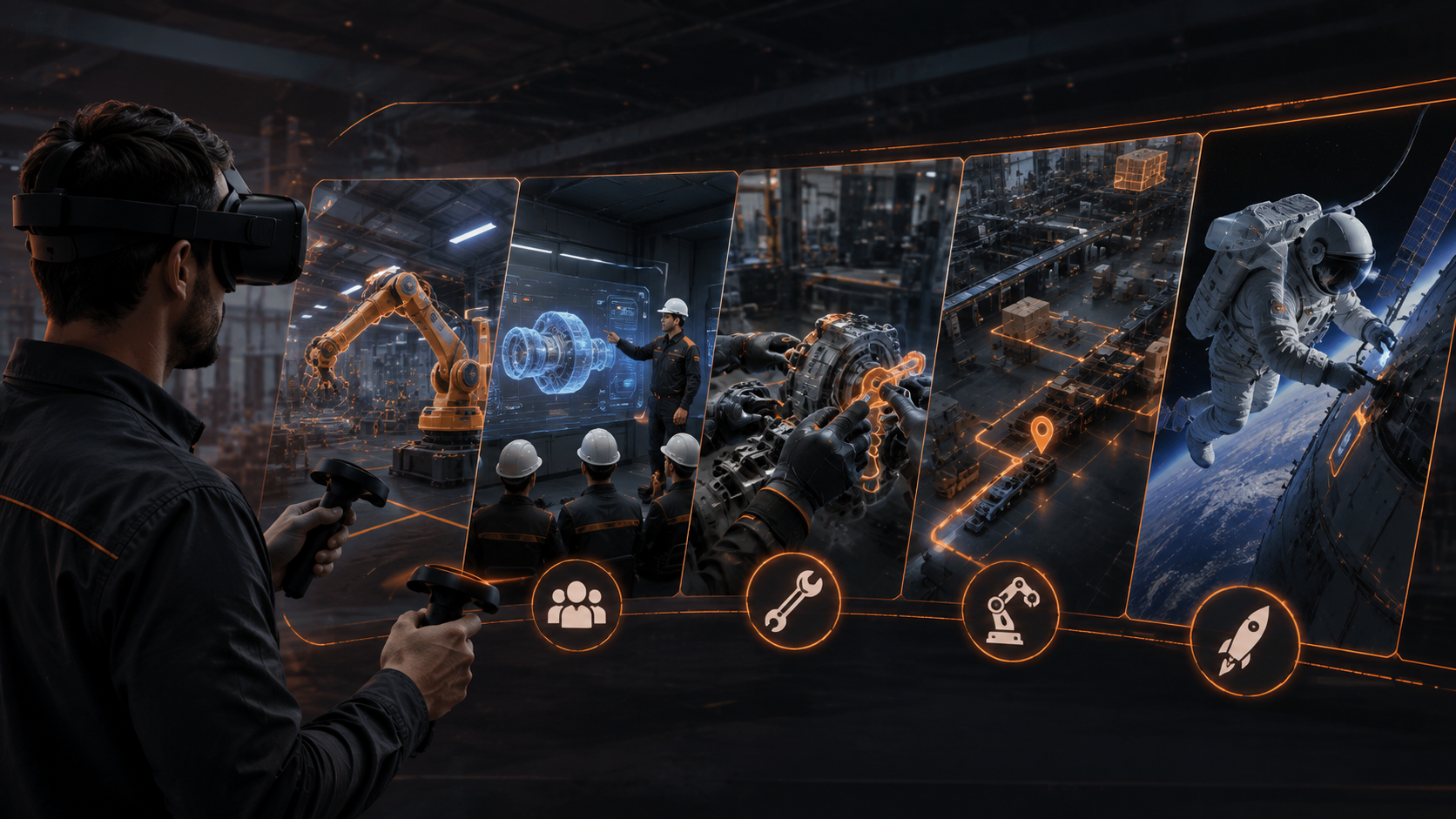
Manufacturing companies are increasingly using VR not only for staff training, but also for presenting technological processes, demonstrating equipment, conducting remote tours, and preparing employees to work with complex systems. Modern VR solutions make it possible to create full immersion in a manufacturing environment, reduce training costs, and make complex technologies understandable even without being physically present at the facility.
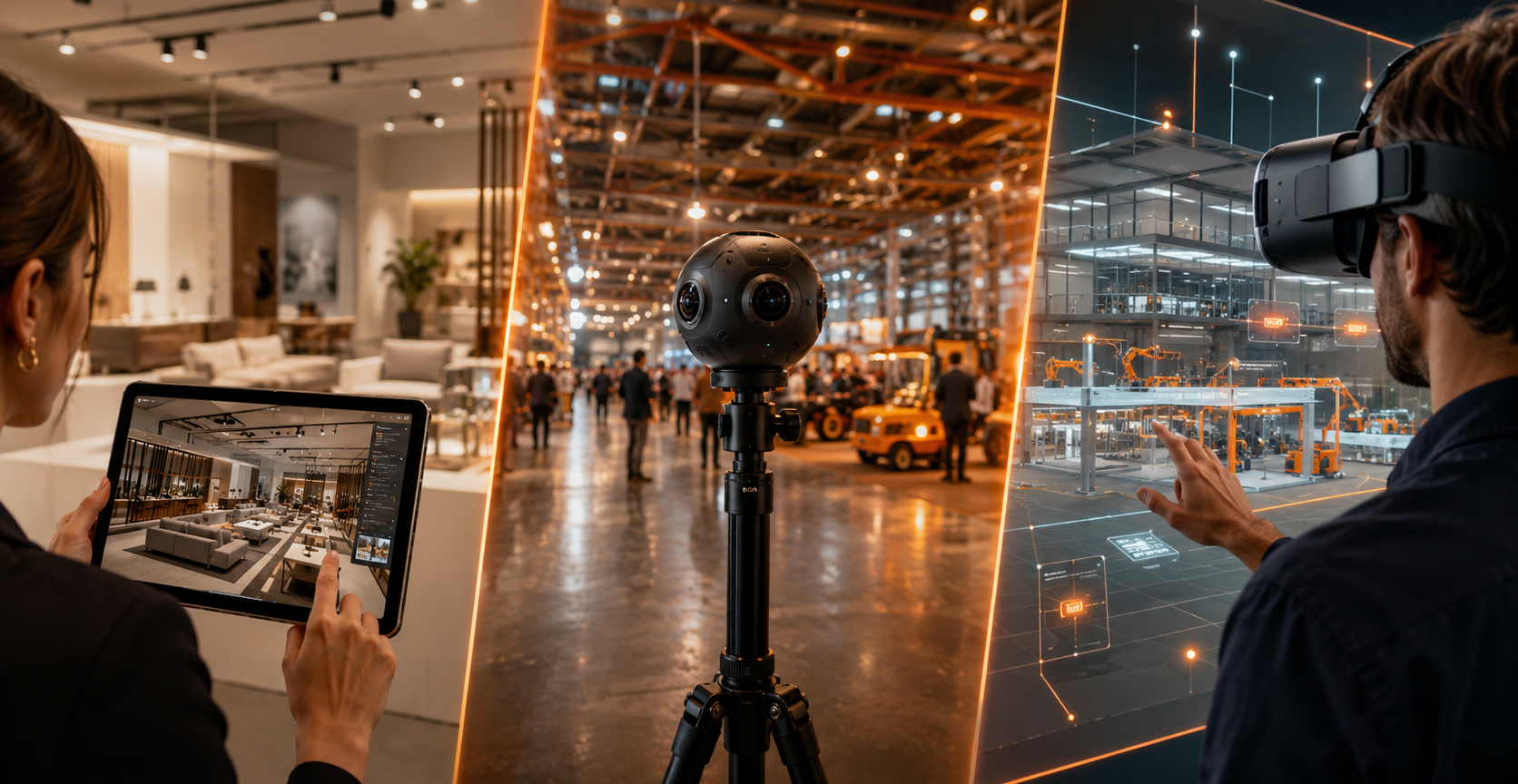
Today, 360 VR video production is becoming especially popular, as it allows companies to present real manufacturing operations in a panoramic format, where users can independently choose the viewing angle, control the camera’s rotation, and experience the most realistic possible sense of presence. When combined with VR simulators, interactive elements, and 3D graphics, such content becomes a powerful tool for business.
Let us examine five real cases that demonstrate different approaches to using VR in manufacturing.
-
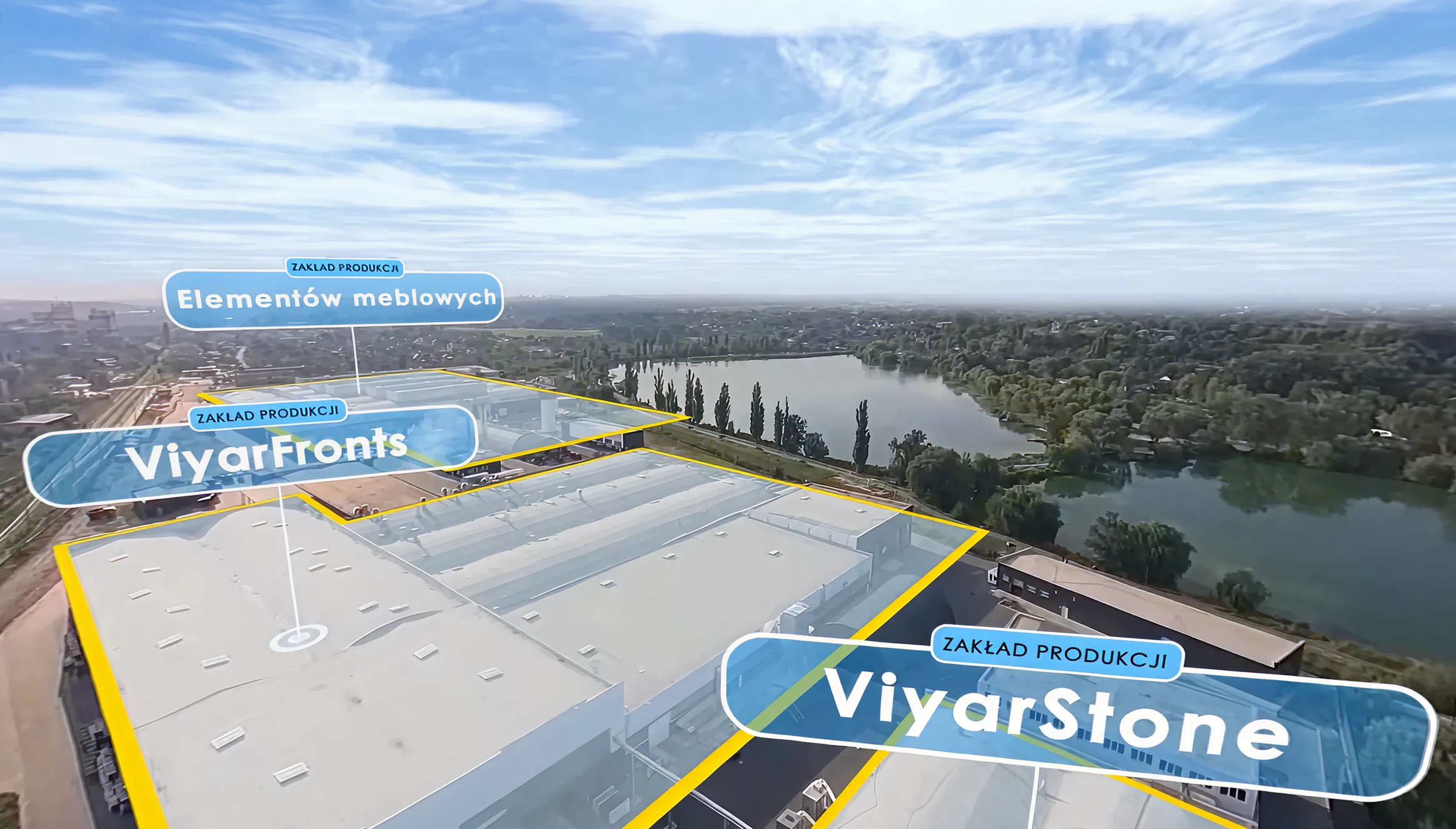
VIYAR Manufacturing VR Tour — a Transparent Demonstration of Furniture Production
The first case demonstrates how 360 VR video production can become an effective alternative to traditional manufacturing facility tours.
A panoramic VR tour was created for VIYAR, guiding users through all stages of furniture manufacturing. Viewers see the company’s operations as if they were physically present inside the production facility.
Project features:
- complete panoramic filming of all production areas;
- a professional camera with high resolution, ensuring detailed visibility of even small elements;
- informational prompts directly inside the VR scene;
- voice-over in Ukrainian, English, and Polish;
- the ability to independently change the viewing angle and direction of rotation.
This format is particularly useful for:
- potential customers;
- dealers;
- investors;
- new employees.
Unlike a conventional promotional video, VR makes it possible to show the entire manufacturing process without editing cuts. Viewers see the real facility, the scale of production, the equipment, and the organisation of processes, which significantly increases trust in the company.
-
Syngenta — Demonstrating the Piccolo Machine in VR
The second case shows how VR helps explain complex technological processes.
Syngenta used VR to present the operation of the Piccolo seed treatment machine and the entire seed-processing procedure.
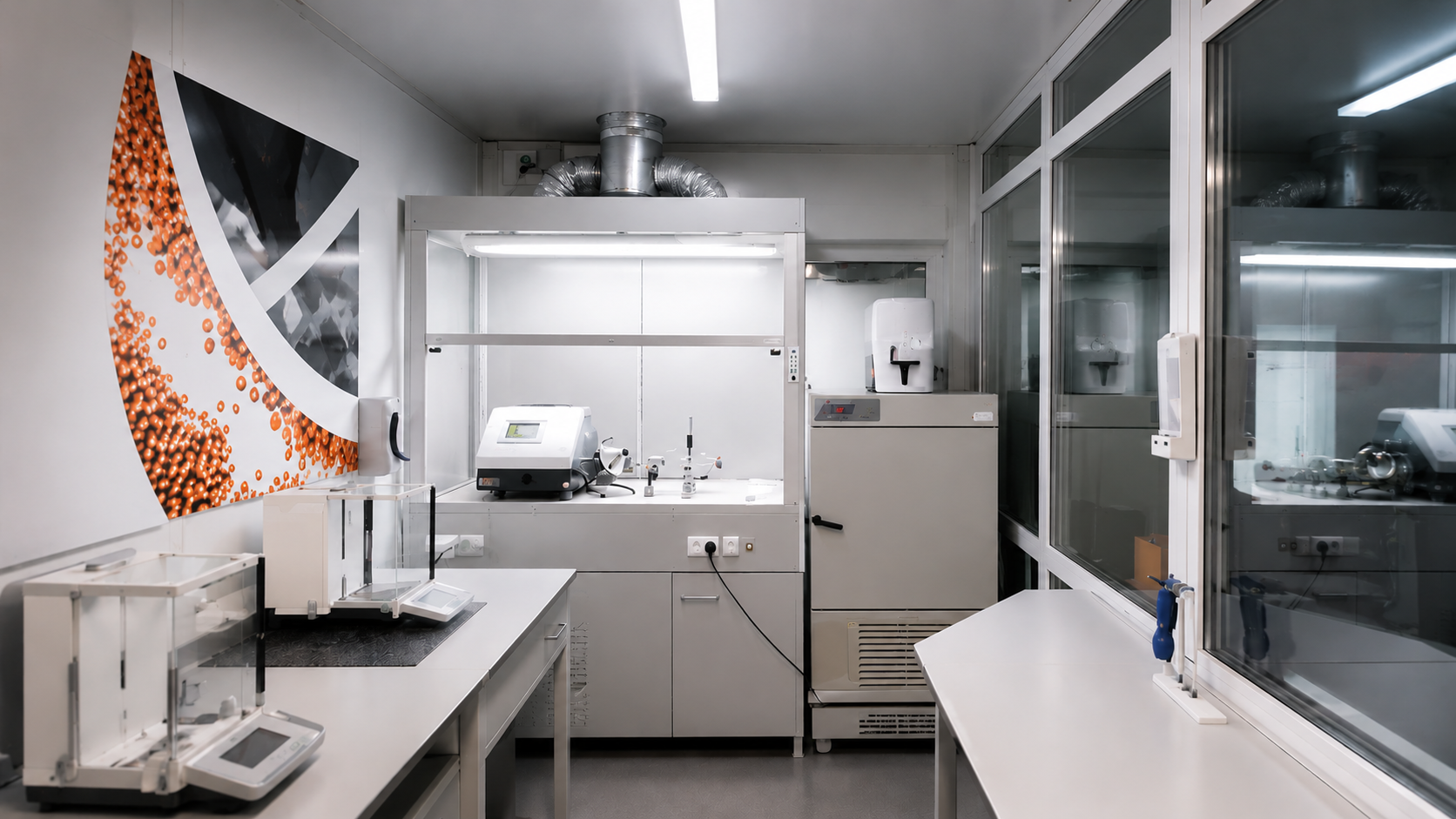
360 VR video production was carried out directly at the manufacturing facility, where the camera captured:
- equipment loading;
- machine operation;
- the application of treatment products;
- laboratory control;
- logistics within the production facility.
The main advantage was the ability to present the technology from any viewing angle. Users independently choose where to look, which is especially important when demonstrating complex industrial equipment.
Thanks to the high level of detail, the operation of mechanisms, sensors, control elements, and staff interaction with the equipment can be clearly seen. This makes the presentation much more informative compared with conventional video.
This format helps companies:
- present new equipment;
- train dealers;
- demonstrate manufacturing processes to partners;
- reduce the number of on-site presentations.
-
VR content for the Peace Summit — demonstration of large-scale objects
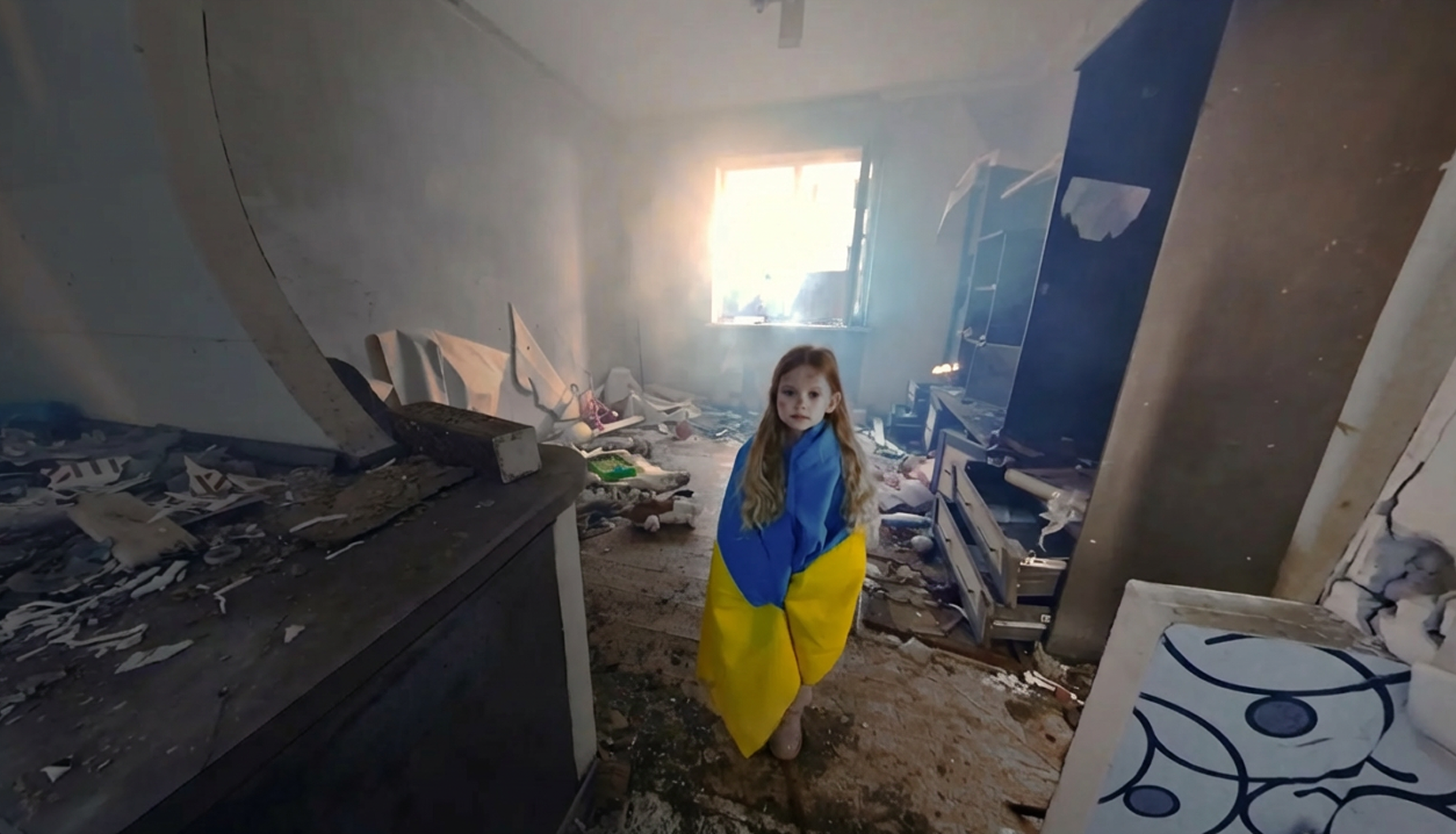
Although this project is not a traditional manufacturing simulator, it clearly demonstrates the capabilities of VR for creating large-scale panoramic content.
During the Peace Summit, a VR video was created that immerses viewers as deeply as possible in a real environment through 360° filming. The project shows how a properly structured panoramic story can communicate atmosphere, the scale of a space, and emotional context.
For industrial companies, this approach opens up a wide range of opportunities:
- presenting large manufacturing complexes;
- demonstrating the construction of new factories;
- showcasing logistics centres;
- presenting infrastructure projects.
Such solutions often combine:
- panoramic filming;
- 3D rendering;
- interactive prompts;
- digital models of equipment;
- informational layers over the video.
As a result, viewers receive not simply a video, but an interactive space with a complete sense of presence.
-
Danone — Staff Training Using VR
Danone introduced VR as a tool for training manufacturing employees. The main objective was to create a safe environment in which staff could practise production scenarios without risk to themselves, the equipment, or the products.
The VR model allows employees to repeat the same manufacturing situations many times, reinforce the correct sequence of actions, and help new staff adapt more quickly.
Advantages of this approach:
- no downtime for real equipment;
- safe practice of mistakes;
- the same level of training for all employees;
- the ability to update training content quickly.
VR can be used to simulate different manufacturing situations, from standard operations to emergency scenarios, significantly improving the effectiveness of staff training.
-
Mercedes-Benz — VR for Safety Training
Mercedes-Benz, together with Leopoly, created a VR solution for training employees in safety procedures.
Instead of traditional briefings, employees enter a fully interactive manufacturing environment where they perform real tasks.
Advantages of this approach:
- full immersion;
- interactive engagement with equipment;
- training without the risk of injury;
- rapid memorisation of the sequence of actions;
- monitoring of simulation results.
The VR system makes it possible to create different manufacturing scenarios, assess whether an employee’s actions are correct, and repeat the training an unlimited number of times. This improves both safety standards and the quality of staff preparation.
Conclusion
Modern VR solutions have long moved beyond the entertainment industry. Today, they help companies train staff, demonstrate manufacturing processes, present equipment, conduct remote tours, and attract new customers.
360 VR video production is particularly effective because it makes it possible to create panoramic content with high resolution, natural movement smoothness, a realistic sense of volume, and the ability to fully view the surrounding space. When combined with 3D rendering, digital models, interactive elements, and product or object visualisation, companies receive a modern tool for presenting their capabilities.
The experience of Ukrainian and international companies confirms that VR is gradually becoming a standard element of the digital transformation of manufacturing, enabling businesses to train employees more effectively, present complex technologies, and build customer trust without requiring a physical visit to the facility.